Georgel and Georgeta Stoicescu v. Romania
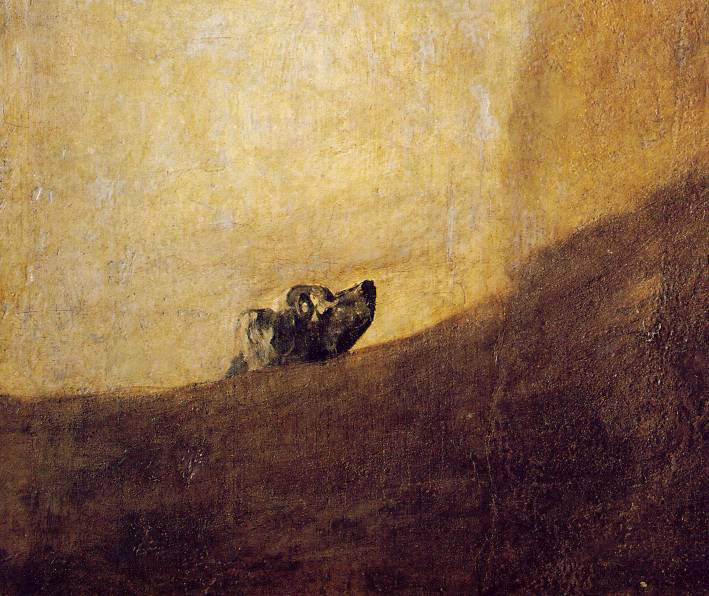
Francisco Goya, The Dog (1820-1823)
Ah, Romania. A country of beauty, history… and a stray dog problem so serious that it became a human rights issue. In Georgel and Georgeta Stoicescu v. Romania, we’re not just talking about a cute pup that bit someone’s ankle. We’re talking about packs of stray dogs roaming the streets, causing havoc, and ultimately biting into something even bigger—the state’s responsibility to protect its people.
A Bloody Backstory: The Dogs That Ruled the Streets
The media reports tell a story that’s hard to believe. For years, Bucharest’s streets were overrun with more than 200,000 stray dogs (§ 34), and people were regularly being attacked, injured, and even killed by these packs. The authorities knew about the problem. But what did they do? Well, let’s just say their solutions were far from ideal.
From the mid-1990s to the early 2000s, Romania attempted to solve the problem by euthanizing tens of thousands of stray dogs. Yeah, not exactly the humane solution that animal rights activists had in mind. The campaign sparked outrage both locally and abroad, with none other than Brigitte Bardot donating 100,000 euros to encourage sterilization instead of the mass killings (§ 34). But despite the public outcry, Bucharest authorities continued their gruesome efforts, with over 80,000 dogs euthanized by 2003 (§ 34).

When the Dogs Bite Back: The Attack on Ms. Stoicescu
Fast forward to 2000. Ms. Stoicescu, an elderly woman, was walking through a residential area in Bucharest, minding her own business, when she was attacked by seven stray dogs. Seven. Not one or two, but a full pack. The attack left her with severe injuries, both physical and psychological. Her life was turned upside down, and she was now too scared to walk the streets. And who can blame her?
But for Ms. Stoicescu, this wasn’t just a freak accident. This was a systemic failure. The authorities had done nothing to control the stray dog problem. Despite the ongoing media reports, the government ignored the danger that these dogs posed to people. And Ms. Stoicescu? She took this fight all the way to the European Court of Human Rights (ECtHR).
What the Court Said: Dog Control Is State Control
When the ECtHR got involved, Romania’s lack of action was put under the microscope. The Court wasn’t just interested in whether Ms. Stoicescu had been bitten. The real question was: Did Romania fail in its duty to protect its citizens? Under Article 8, which protects the right to private life, the Court ruled that Romania had a positive obligation to ensure public safety.
The state’s neglect was clear. Despite widespread media reports of stray dog attacks, the government failed to take appropriate action. And the court wasn’t having Romania’s excuses. The authorities tried to brush off the blame, pointing fingers at NGOs and claiming that society as a whole shared the responsibility (§ 47). But the Court ruled that public safety was the state’s job, and when people are dying from dog attacks, you can’t just sit back and say, “It’s complicated.”
Freedom to Roam, or Freedom to Kill?
The case took on another layer of complexity because of Romania’s previous attempts to control the stray dog population through euthanasia. But the ECtHR didn’t give Romania a pass just because they had tried (and failed) to tackle the issue. The mass killing of stray dogs didn’t solve the problem. In fact, it only caused more public outcry, while the attacks continued.
The Court concluded that Romania’s inaction had resulted in serious harm to Ms. Stoicescu, not just physically, but also emotionally. The ongoing fear she lived with after the attack was a clear breach of her right to personal safety under Article 8 (§§ 53-62).
The Big Takeaway: When Dogs and the State Collide
What’s the moral of this tragic and twisted tale? The Georgel and Georgeta Stoicescu v. Romania case shows that sometimes it’s not just about the dogs. It’s about the state’s responsibility to protect its people—from both animal attacks and the consequences of doing nothing. And let’s not forget the dogs themselves. Romania’s mass euthanasia campaigns were brutal, but ultimately ineffective.
This case reminds us that when the state fails to act, everyone suffers—whether it’s the stray dogs or the people walking the streets. And while you can’t blame the dogs for doing what dogs do, you sure as hell can blame the authorities for not keeping them under control.
 Guilty Pleasures