Pinto Coelho v. Portugal (no 2)
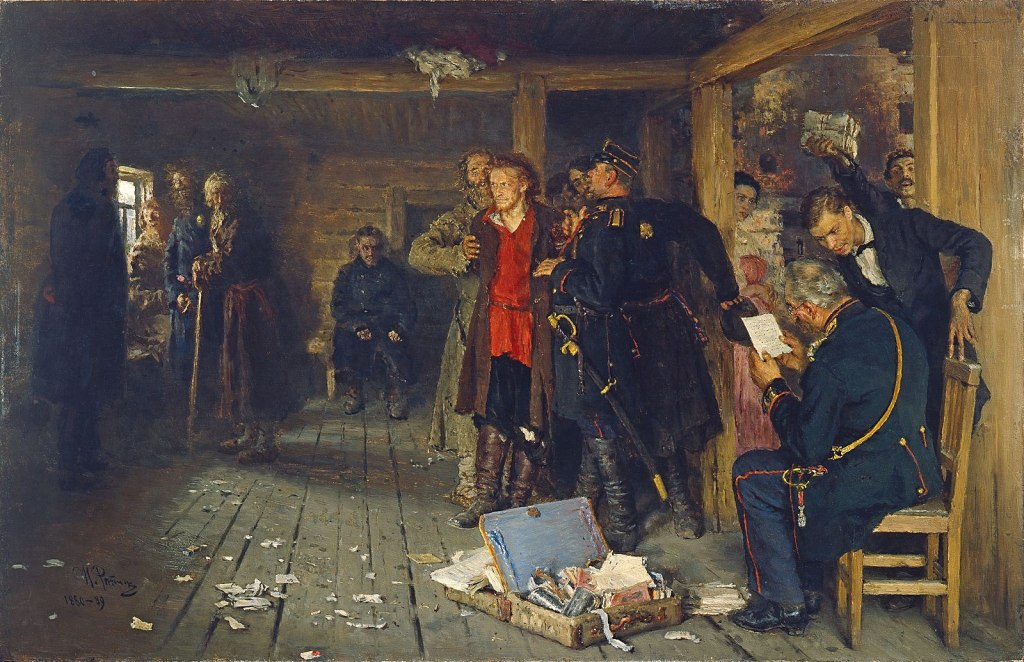
Ilya Repin, Arrest of a Propagandist (1878)
Back in 2005, journalist and courtroom regular Pinto Coelho found herself at the heart of a legal storm. She wasn’t just reporting on a case—she was going head-to-head with the Portuguese justice system. Her crime? Airing courtroom audio recordings without permission. The twist? Coelho had digitally altered the voices and added subtitles to tell the story of an 18-year-old boy’s conviction for aggravated theft. She believed the judges had made a colossal mistake. But the Portuguese courts? Not so much.
Coelho’s report aired, complete with altered voices and courtroom drama, but things quickly took a turn. The president of the court filed a complaint. And when a president starts calling the shots, you know trouble’s brewing (§ 11). Coelho and her news program were charged under Article 88 of the Portuguese Code of Criminal Procedure for airing recordings without judicial permission (§ 8).
The Court Strikes Back: €1,500, Please
In 2008, the District Court of Oeiras wasn’t having any of Coelho’s journalistic flair. They slapped her with a €1,500 fine for breaking the rules (§ 16). The court’s reasoning? Press freedom is essential, but rules are rules—even for a seasoned journalist like Coelho. Being both a lawyer and a journalist, she should have known better, right?
But Coelho wasn’t just any journalist. She wasn’t about to let this go. No, she had bigger plans. Off she went to Strasbourg and the European Court of Human Rights (ECtHR), waving her Article 10 flag—that’s freedom of expression, folks (§ 28).
The Plot Thickens: Satire, Journalism, or Just Trouble?
At the ECtHR, Coelho argued that her conviction violated her right to freedom of expression (§ 28). After all, she was simply reporting on a matter of public interest—did it really matter that she hadn’t asked for permission? The Portuguese government wasn’t backing down, though. They said the whole thing was about protecting the integrity of the judicial system and the right to privacy of those involved (§ 30).
But here’s the kicker: the trial was already over when Coelho aired the recordings (§ 49). So how exactly was justice under threat? And the witnesses’ voices were altered to protect their identities, so where’s the harm?
The Turning Point: Satire or Scandal?
The ECtHR wasn’t buying the government’s argument. They agreed that journalists have duties, but they also have the right to inform the public about miscarriages of justice (§ 43). And with no complaints from the witnesses and the trial already concluded, the court ruled that Coelho’s broadcast wasn’t damaging the legal system (§ 50). In fact, they saw it as a public service.
The €1,500 fine? Well, even though it might seem like pocket change, the court was concerned it could have a chilling effect on other journalists. After all, no one wants to be slapped with a fine just for doing their job (§ 53).
The Final Twist: A Dissenting Judge
Not everyone was on Team Coelho, though. Judge Zupančič dissented, arguing that the court hadn’t done enough to balance the interests of freedom of expression with the impartiality of the judiciary (§ 55). He believed the judiciary deserved more protection, and letting Coelho off too easily sent the wrong message.
But the majority ruled in Coelho’s favor, deciding that Portugal had violated her Article 10 rights (§ 54). In the end, the public’s right to know won out, and Coelho walked away with a moral victory—and no need to pay the fine.
The Takeaway: Journalism, Justice, and a €1,500 Gamble
So, what’s the moral of the story? Freedom of expression matters, especially when the public interest is at stake. But in Portugal, even journalists have to watch their backs when dealing with courtrooms. Coelho’s fight wasn’t just about a €1,500 fine—it was about the right to report on what matters, even if that means bending the rules.
And for those thinking about pushing the limits of press freedom? Just remember, sometimes the price of justice is €1,500—or a trip to Strasbourg.
 Guilty Pleasures