Vajnai v. Hungary
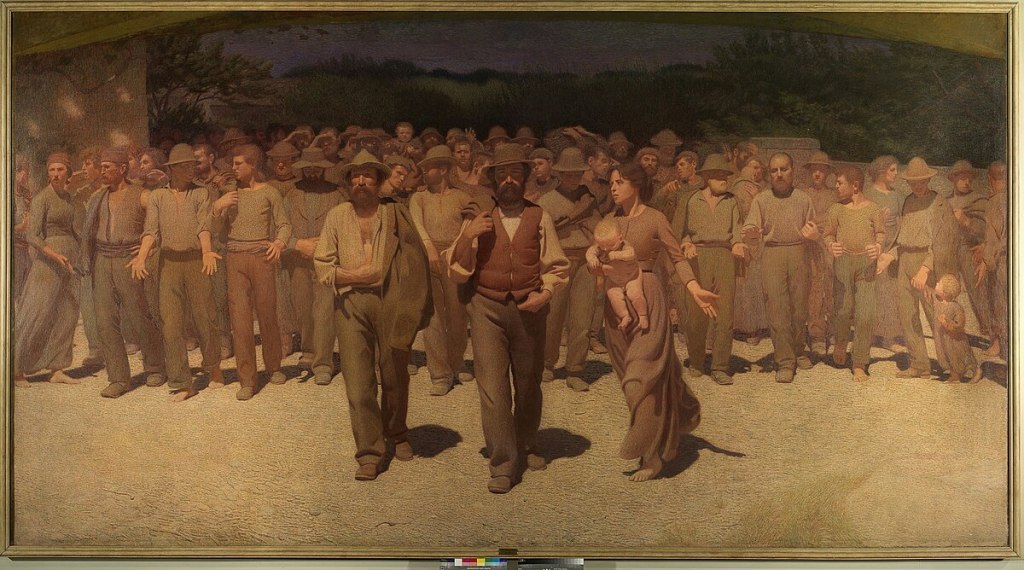
Giuseppe Pellizza da Volped, The Fourth Estate (1901)
In the battle for freedom of expression, few symbols have caused as much controversy as the humble red star. It’s more than just five points—it’s a political lightning rod, a symbol that has stirred revolutions, inspired workers’ movements, and, in Hungary, gotten people arrested. In Vajnai v. Hungary, the European Court of Human Rights (ECtHR) had to decide if wearing this star was a criminal act or an essential part of political expression.
The Man with the Star
Let’s rewind to Budapest, 2003. Attila Vajnai, vice president of Hungary’s Workers’ Party, shows up to a peaceful demonstration with a red star pinned to his jacket. He wasn’t marching in the name of tyranny or totalitarianism—Vajnai was making a statement about socialism and workers’ rights. But the authorities saw that star as something else entirely: a symbol of the old authoritarian regimes that once oppressed Hungary. Arrested, convicted, and slapped with probation, Vajnai didn’t back down. No, he took his fight straight to the ECtHR.
Hungary’s Argument: The Past is Still Painful
For Hungary, banning the red star was about more than symbolism. The government argued that it represented a dark chapter in their nation’s history, when communist regimes ruled with an iron fist, stifling freedoms and persecuting citizens. Allowing it to be displayed, they claimed, could disturb public order and stir up old wounds. They weren’t criminalizing Vajnai’s political views, they insisted—they were protecting the public from the horrors of the past (see § 14 of the decision).
The Court’s Ruling: Symbols Have Many Meanings
The ECtHR, however, saw things differently. Sure, the red star has some pretty unpleasant associations. But it’s also a symbol of the workers’ movement, socialism, and anti-fascism. In short, the red star means different things to different people. The Court noted that banning such a multifaceted symbol without a “pressing social need” couldn’t be justified in a democratic society (see § 50). The Hungarian government’s concerns about public disorder? They were speculative at best—there was no evidence that Vajnai’s little star was going to spark a revolution.
“Pressing Social Need” or Overreach?
Hungary’s mistake, according to the Court, was its failure to prove that banning the red star was necessary to maintain public order. The ECtHR emphasized that, in a democracy, the right to freedom of expression includes not only ideas that are favorably received, but also those that “offend, shock, or disturb” (see § 44). Political speech—especially the kind that challenges the status quo—is vital to democracy. And that includes using symbols like the red star, even if they come with baggage.
Chilling Effect on Political Discourse
One of the Court’s major concerns was the potential chilling effect of criminalizing political symbols. By banning the red star, the Hungarian government wasn’t just regulating symbols—they were effectively stifling political debate. What happens when a government starts picking and choosing which symbols are acceptable? The Court feared this would lead to self-censorship, with people refraining from expressing their political views for fear of prosecution (see § 53).
The Takeaway: A Star, A Statement, A Victory for Expression
The Vajnai v. Hungary case isn’t just about one man and a red star—it’s a reminder of how crucial freedom of expression is in a democratic society. Sure, symbols like the red star might dredge up difficult memories. But democracy thrives on debate, not silence. And in this case, the ECtHR made it clear: the state can’t criminalize a symbol just because it’s uncomfortable.
In the end, Vajnai walked away with more than just a symbolic victory—he won an important legal precedent for the protection of political expression. So, next time you see someone donning a controversial symbol, take a moment to think: is it an act of oppression, or the ultimate expression of democracy?
 Guilty Pleasures