Ramadan v. Malta and Genovese v. Malta
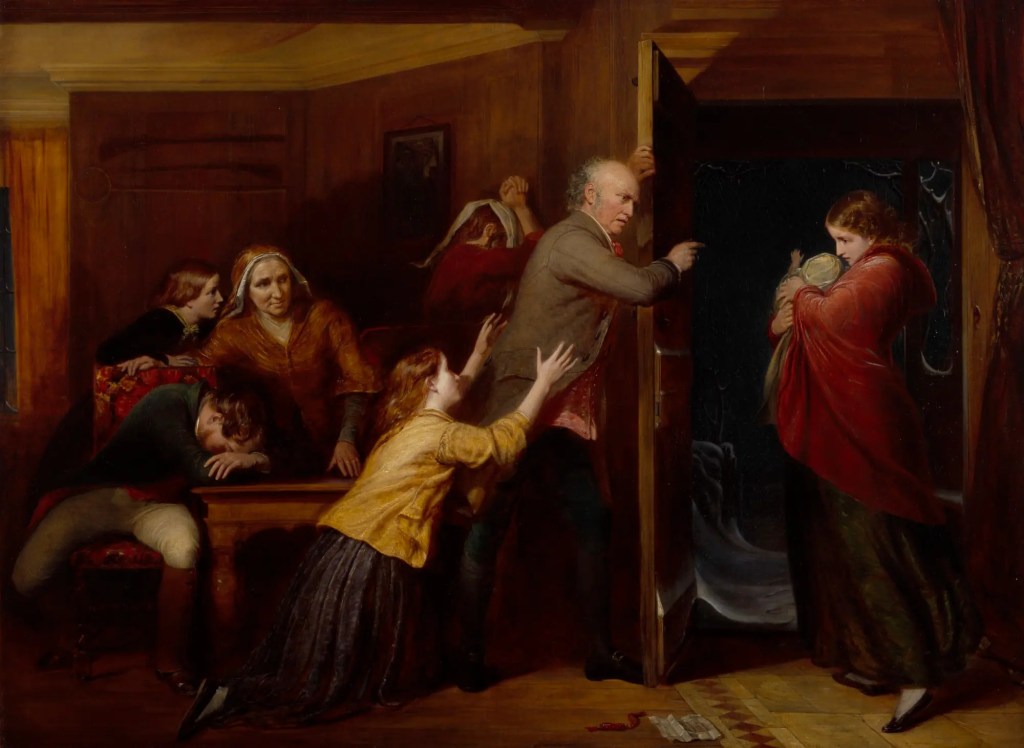
Richard Redgrave, The Outcast (1851)
Welcome to Citizenship War, where two pivotal cases—Ramadan v. Malta and Genovese v. Malta—go head-to-head, challenging the way Malta grants and revokes citizenship. This isn’t just a legal skirmish; it’s a battle over identity, fairness, and the very fabric of human dignity. Malta’s stringent citizenship policies collide with European human rights principles, forcing us to ask: where do you draw the line between state sovereignty and individual rights?
Genovese v. Malta (2011): A Child Born, A Right Denied
Imagine being denied citizenship by your own country simply because your parents weren’t married. In Genovese, that’s precisely what happened. The case revolved around a boy born to a Maltese father and a British mother. Despite clear proof of paternity, Maltese law refused him citizenship because his parents hadn’t tied the knot. The ECtHR wasn’t having any of it. It found that Malta’s refusal to grant citizenship based on illegitimacy violated Article 14, in conjunction with Article 8—protection against discrimination and the right to private and family life.
The Court condemned this outdated view of legitimacy, declaring that, “Maltese law discriminated against the applicant by preventing his access to citizenship on the sole ground that he was born out of wedlock” (§50). The state’s defense, that granting citizenship to illegitimate children would create legal chaos, was dismissed by the ECtHR as insufficient to justify such discrimination (§§39-42).
Ramadan v. Malta (2016): Statelessness and the Risk to Family
In Ramadan, we see an even more precarious situation. Mr. Ramadan, an Egyptian national who had acquired Maltese citizenship through marriage, found himself stripped of that citizenship after his marriage ended in annulment. Worse still, this decision left him stateless, a vulnerable and legally limbo-like state that could potentially impact his children’s citizenship. What if his children, too, were at risk of losing their Maltese nationality?
Despite these alarming risks, the ECtHR did not find a violation of Article 8. Why? The Court acknowledged that citizenship matters fall within the broad discretion of state sovereignty, and Malta had revoked Ramadan’s citizenship lawfully, in pursuit of preventing fraud (§77). The Court saw the revocation as proportionate, given that Malta had followed a legitimate procedure to protect the integrity of its nationality laws, even though it recognized that the outcome was severe (§94).
The Citizenship War: Who Has the Right to Belong?
At the heart of these cases lies a fundamental tension between state control and individual rights. Genovese was a triumph for human dignity. The ECtHR didn’t just reject Malta’s outdated views on legitimacy—it reaffirmed that no one should be excluded from citizenship due to the marital status of their parents. The decision drew a firm line against discrimination based on birth status, confirming that everyone deserves the right to belong.
In Ramadan, however, sovereignty prevailed. Despite the potential harm of statelessness and the impact on his family, the Court sided with Malta’s right to regulate its citizenship rules. The decision was a sobering reminder that, in some cases, state interests may override personal tragedies—even when children’s futures hang in the balance.
Conclusion: A Fragile Balance
In the Genovese case, the ECtHR championed equality and fairness, while in Ramadan, Malta’s legal framework held strong against a human rights claim. These cases reveal the delicate, sometimes precarious balance between protecting national integrity and respecting individual dignity. When the dust settles in this Citizenship War, it’s clear that the right to belong isn’t just about legality—it’s about humanity.
 Guilty Pleasures