Kurski v. Poland
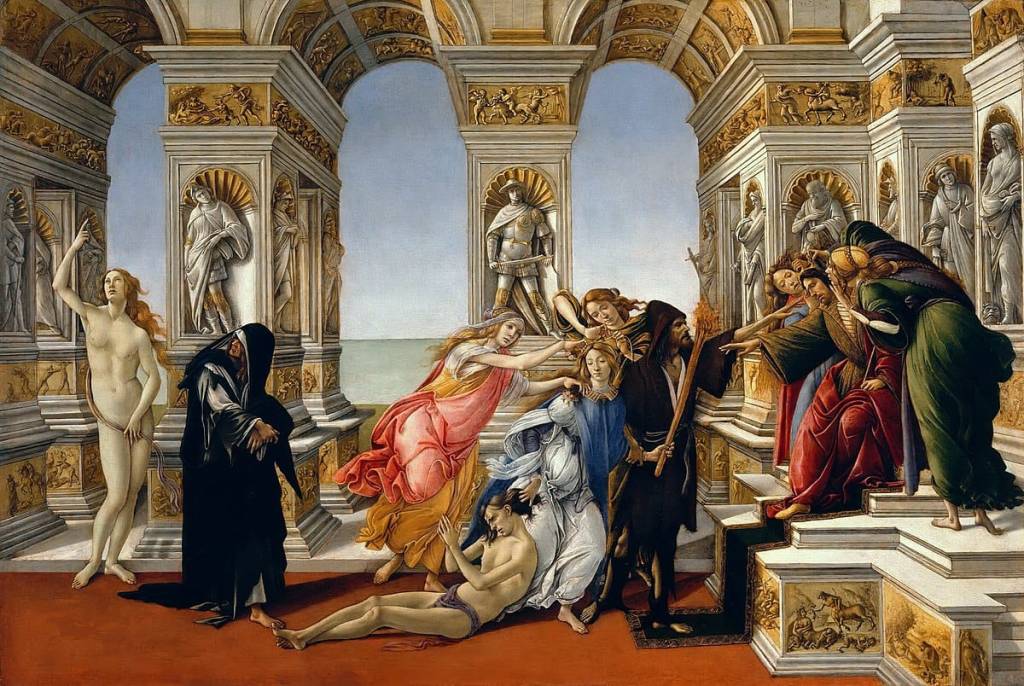
Botticelli, Calumny of Apelles (1494-1495)
The Setup: The Politics of Public Apologies
Picture this: a live TV debate, a heated politician, and a national newspaper all in the same ring. The main character? Jacek Kurski, a Polish MP back in 2006, ready to call out what he claimed was a “mass propaganda” machine fueled by none other than Gazeta Wyborcza, a well-known Polish newspaper. The plot thickens as Kurski brandishes a copy of the newspaper, accusing them of being in bed with an oil company, financing anti-political party propaganda. That’s right, according to Kurski, they weren’t just selling newspapers—they were allegedly selling political attacks (§ 8).
Cue the fallout: the newspaper, naturally, was not amused. They took Kurski to court, claiming he had smeared their reputation and demanded not only a financial penalty but—wait for it—a public apology! And thus began the legal journey of Kurski, who ended up fighting this all the way to the European Court of Human Rights (ECtHR) (§§10-12).
The ECtHR Drama: To Apologize or Not to Apologize
Now, in a world where politicians throw around accusations like confetti, the idea of being ordered to apologize might seem quaint, or even a little amusing. But in Kurski’s case, the stakes were high. Not only did the Polish courts rule against him, but they even gave the newspaper the right to publish an apology on his behalf when he refused to do it himself. Ouch (§30).
So Kurski wasn’t going down without a fight. He turned to the ECtHR, claiming that this whole forced-apology saga violated his right to freedom of expression under Article 10 of the European Convention. After all, politicians love a good debate, right? Shouldn’t they have a bit more leeway when accusing newspapers of shady oil deals? (§§34-35).
The European Court: Let the Politicians Speak
The ECtHR agreed, much to the likely horror of PR professionals everywhere. The Court concluded that while Kurski’s claims were “quite serious” (I mean, oil-financed propaganda?), Gazeta Wyborcza wasn’t just any newspaper—it was a major player in public debate (§§49-50). And when you’re in the big leagues of media, the Court says, you should expect a bit more criticism than the average Joe. The lesson here: newspapers might just have to put up with a politician’s pointed finger, even if it’s wielding wild allegations about oil money and political takedowns.
What’s more, the Court found that asking Kurski to prove his conspiracy theory wasn’t fair game. This wasn’t a private citizen he was talking about; it was a national media heavyweight involved in public debate (§56). The Court also took issue with the hefty fines and costs imposed on Kurski, pointing out that this “apology” cost nearly 18 times the average monthly salary in Poland (§57).
The Verdict: Freedom Wins… for Now
In the end, Kurski walked away with 12,000 euros in damages and a newfound sense of justice, with the ECtHR ruling that the Polish courts had trampled on his right to free speech (§63).
But here’s the twist: while the ECtHR protected Kurski’s freedom of expression, it left open the door for newspapers to fight back in similar situations. The balance between protecting reputations and freedom of speech is a delicate dance, and the judgment might have been a win for Kurski, but it leaves plenty of room for future showdowns in the court of public opinion (§58).
Let’s be real—watching a politician have to apologize to a newspaper he accused of oil-financed propaganda is exactly the kind of drama that makes ECtHR rulings a must-read. And for all the legal back-and-forth, Kurski v. Poland shows us that sometimes, even wild accusations deserve their day in court. Who needs soap operas when you have real-life political theater like this?
 Guilty Pleasures