Executief van de Moslims van België and Others v. Belgium
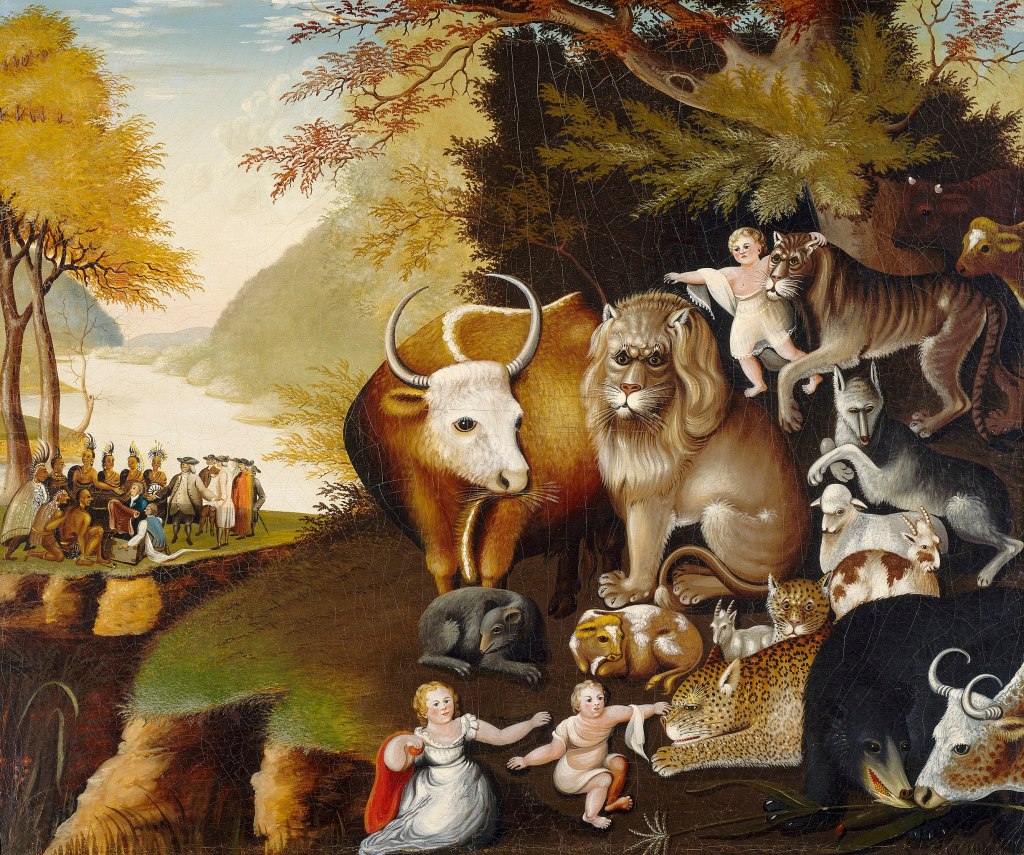
Edward Hicks: The Peaceable Kingdom (c . 1833–34)
Imagine standing at the intersection of two bustling roads—one representing the freedom to practice your faith, the other the need to protect animal welfare. The recent case Executief van de Moslims van België and Others v. Belgium put the European Court of Human Rights (ECtHR) squarely at this crossroad, and its decision to uphold Belgium’s ban on ritual slaughter without prior stunning raised eyebrows around the world. Let’s explore what went down, why it mattered, and where it leaves us.
The Dispute in Belgium: Ritual Slaughter vs. Stunning Ban
In Belgium, the Flemish and Walloon regions introduced laws banning slaughter without prior stunning—aiming to protect animal welfare. This immediately sparked a legal firestorm. For the Muslim and Jewish communities, slaughter without stunning is a religious imperative. The applicants argued that the ban forced them to either abandon key religious practices or source meat from elsewhere, putting their religious freedom on the chopping block.
The applicants challenged the ban at the Belgian Constitutional Court, which in turn sought guidance from the European Court of Justice (ECJ). The ECJ ruled that the ban was in line with EU law. Following that, the Belgian court dismissed the applicants’ challenge. So, the case went up to the ECtHR—could the ban stand under the European Convention on Human Rights?
The Court’s Delicate Balancing Act: Freedom and Public Morals
The ECtHR’s judgment was no small task. Article 9 of the European Convention protects religious freedom, but that freedom isn’t absolute—it can be limited to protect public safety, health, morals, or the rights of others. Here’s the ECtHR’s logic: while ritual slaughter without stunning indeed fell under religious rites protected by Article 9, animal welfare—recognized as a key element of public morals—was an equally important value, especially in today’s Europe where ethical treatment of animals is increasingly central.
In weighing the ban against Article 9, the ECtHR noted a significant point: this wasn’t an outright prohibition of ritual slaughter. The ban offered a middle ground with “reversible stunning,” a technique that doesn’t kill the animal, aimed at respecting both animal welfare and religious practices (Para. 88). Belgium’s meticulous parliamentary process and the scientific studies it considered convinced the Court that the ban was proportionate and in line with the concept of public morality as defined under Article 9(2) (Para. 97). The Court emphasized that the notion of “morals” is evolutionary and should reflect prevailing social values, which increasingly prioritize animal welfare (Para. 96).
The Court also observed that the interference met the requirements of being “necessary in a democratic society” (Para. 103). Belgium had conducted an extensive consultation with affected groups and experts, including religious representatives, veterinarians, and animal welfare associations, before implementing the ban (Para. 109). This thorough consideration strengthened the argument that the interference was both reasonable and necessary to achieve its goals.
The Big Question: Were the Rights Violated?
But was it fair? Was the state really justified in saying, “Sorry, but the welfare of animals matters enough to limit your religious practice”? That’s a hard question, and it is why the ECtHR’s decision matters far beyond the borders of Belgium.
Interestingly, the judges concluded that the interference with religious freedom was justified. They accepted that public morality could include concerns for animal welfare, and Belgium’s approach aimed to balance the new animal protection measures with religious practices. However, for many people, this judgment has left lingering questions about whether animals’ rights should weigh against religious rites.
Animal Welfare Meets Religious Tradition: The Article 14 Angle
The applicants also argued a violation of Article 14 (prohibition of discrimination), claiming discrimination against Muslim and Jewish communities compared to hunters, fishermen, and the general population. The ECtHR examined whether these groups were treated differently in a discriminatory way. It concluded that, given the unique nature of ritual slaughter and the ban’s focus on farm animal welfare rather than wild animals, there was no unjustifiable discrimination (Para. 146). The measures—specifically the alternative stunning method—were deemed proportional and non-discriminatory, ensuring there was no breach of Article 14 (Para. 151).
What’s Next?
The implications of this decision reach beyond the courtroom. It’s about how societies navigate pluralism. Today, Europe is increasingly aware of animal welfare, yet also stands on traditions of religious freedoms. As debates rage on, will we continue finding that balance? The Belgian authorities here tried, but the ECtHR’s ruling makes clear it’s a delicate dance. After all, Belgium did offer an alternative—reversible stunning—and consulted widely. But is that enough for those who feel their faith is being restricted?
In short, Executief van de Moslims van België and Others v. Belgium may seem to be about slaughter, but at its heart, it’s about how we decide what’s more important—faith or ethics, tradition or progress.
 Guilty Pleasures